
El presidente de los Estados Unidos ha llamado a Cuba una “nación fracasada” después de que la isla registrara un apagón de 29 horas esta semana.
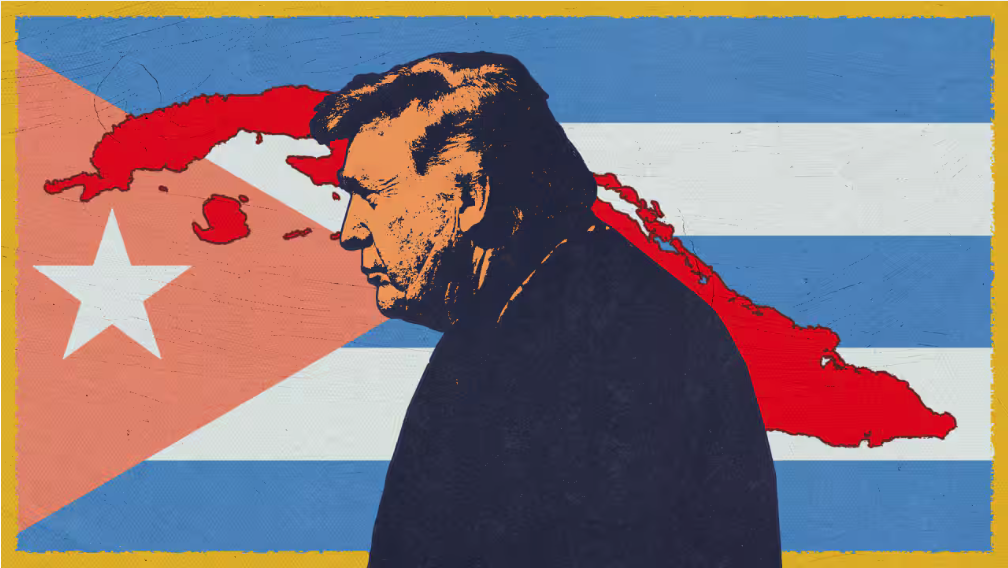
A medida que la crisis humanitaria y energética en Cuba empeora, el presidente de los Estados Unidos, Donald Trump, ha revelado que planeaba “tomar” la isla del Caribe.
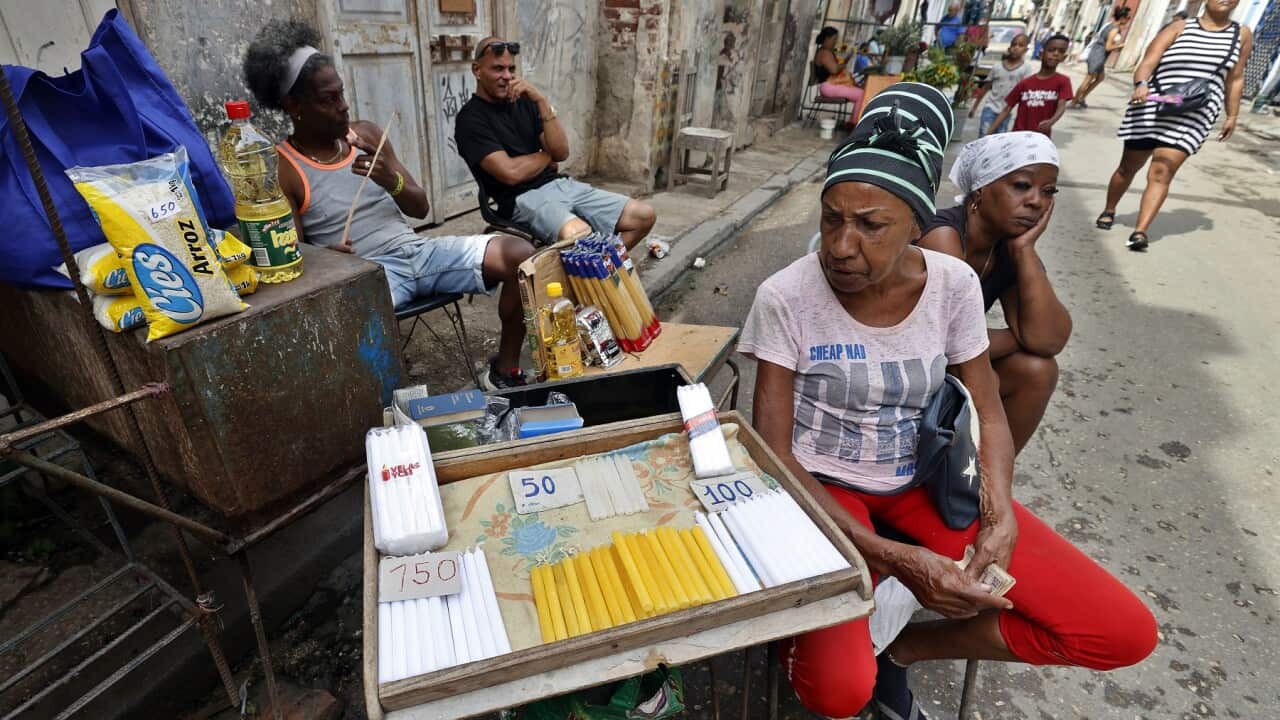
Esta semana, alrededor de 10 millones de personas en Cuba se quedaron sin electricidad durante más de 29 horas, ya que la ya anticuada red eléctrica de la isla colapsó, tres meses después de que Estados Unidos impusiera medidas para ahogar el suministro de petróleo de Cuba.
La crisis energética ha empeorado después de que Estados Unidos arrestara al expresidente venezolano Nicolás Maduro en enero, ya que Venezuela es el mayor proveedor de petróleo de Cuba.
Hablando en la Casa Blanca sobre el corte de energía, Trump calificó a Cuba como “una nación fallida”.”They have no money. They’ve no oil. They have no nothing,” he told reporters, adding that he believed he would have “the honour of taking Cuba”.
“Tomando Cuba de alguna forma… quiero decir, si la libero, tómala. Creo que puedo hacer lo que quiera con él, quieres saber la verdad. Son una nación muy debilitada”, dijo.
“Gran error”: Por qué el plan del presidente Trump de “tomar Cuba” puede ser un gran error de cálculo
Si bien Trump ha afirmado que Cuba sería su próximo enfoque después de la guerra en Oriente Medio, los expertos dijeron que sería difícil para él tratar a Cuba como otra Venezuela, y Estados Unidos podría enfrentar más problemas si de hecho lanzan ataques contra la isla.
Trump’s new tactics on the historical conflict with Cuba
The US has had a long history of trying to isolate Cuba through imposing stronger and stronger trade embargoes, choking the island’s economy.
Tom Chodor, senior lecturer in politics and international relations at Monash University, said the US also had a long history of pushing for regime change.
“The Americans have tried to overthrow the Castro regime and the revolutionary regime through various means,” Chodor told SBS News.
They tried to poison Fidel Castro through various quite ridiculous schemes. They sponsored an expedition of exiles to try to retake the island, which ended very badly in the famous Bay of Pigs incident in 1961.”
Flavia Bellieni Zimmermann, an international relations analyst and lecturer at the University of Western Australia, agreed that the US intervention into Cuba wasn’t new.
But she pointed out that Trump’s approach has been different.
“What Trump is doing is very overt. He’s openly interventionist, openly aggressive,” Zimmermann told SBS News.
“Some commentators are even framing that we are witnessing the rise of the Donroe Doctrine,” she said, a reference to the Monroe Doctrine — the US foreign policy that opposes European intervention in the Americas while justifying further US intervention in the region over time.
“It is significantly different because it is proud of being interventionist, and we haven’t seen it before.”
One of Trump’s confidants, US secretary of state Marco Rubio, who’s also the child of Cuban exiles, has played a major role in pushing interest in the region, according to Chodor.
“On other issues, Marco Rubio is a bit more sidelined,” Chodor said.
“On China, for example, he doesn’t seem to be calling the shots. But on issues like Latin America, he really is the main guy.
“He sort of apparently is the one that pushed Trump to intervene in Venezuela. He is the one that is going to Latin America and saying, ‘You need to kick China out. You need to toe the line with us on drugs, immigration, and so on.’ So I think he’s got a big part to play there.”
This week, Rubio has also followed Trump and said Cuba would need new leadership to revive its economy.
“It’s a non-functional economy. It’s an economy that has survived,” he said.
“And the people in charge, they don’t know how to fix it. So they have to get new people in charge.”
Do people in Cuba look for a change?
In 2014, former US president Barack Obama normalised relations with Cuba, but hundreds of thousands of Cubans had already left the country.
Ary Guerrero grew up in Cuba before moving to Australia eight years ago. She told SBS News that many Cubans have become numb to the suffering, including the constant power outage in the past three years.
“So they are just struggling with every daily task … imagine not having power for 20 hours, up to 20 hours,” she said.
Following the capture of Maduro, Trump cut off Venezuelan oil shipments to Cuba, which escalated the energy crisis in the Island.
READ MORE
By late February, black market petrol prices in Cuba leapt from around $2,000 pesos per litre to $6,000 pesos.
Official data in Cuba puts the average state employee salary at 6,500 Cuban pesos per month.
With food running out and blackouts becoming longer and more frequent, Cuban President Miguel Díaz Canel announced that he had opened talks with Washington.
“Cuban officials have recently held conversations with representatives of the United States government,” he said.
“These conversations have been aimed at seeking solutions through dialogue to the bilateral differences we have between the two nations. There are international factors that have facilitated these exchanges.”
READ MORE
Guerrero said while there was support for the regime in Cuba, many also wanted regime change, but feared what US intervention would entail.
“I [feel] very helpless,” she said.
“What I want is a better future in Cuba and a better future for the Cuban people, because they are the ones who have been enduring so much pain and suffering for so many years.”
Can Trump really remove the leader of Cuba?
Despite what Trump and Rubio have said, Chodor says there’s no legal basis for the US to intervene in Cuba.
“It would be an illegal invasion under international law, just like [the] Venezuelan operation was, just like the Iran war currently,” he said.
“There’s no clear and imminent threat that Cuba poses to the United States, so this is just something that the US administration may choose to do out of its own whim, but it’s not a legal basis for it.”
READ MORE
Zimmermann says the Trump administration would be mistaken to think Cuba will be the same as Venezuela.
“I have serious doubts that if they go to Cuba and just remove the leader, it’s gonna work because of the structures, because it’s so deeply entrenched in the Cuban political ethos and the Castro family,” she said.
“It’s going to be way more complex. If they’re thinking that because they were successful in Venezuela, they will be successful in Cuba, that would be a big mistake.”
She said while taking on Cuba could have strategic benefits for the US, Washington might be overconfident and underprepared for what political change in Cuba would unfold.
“History tells us that the Americans are not very good [at] thinking long term,” she said, adding that the US is now engaging in several wars at the same time, evoking déjà vu of the war in Iraq and Afghanistan in the 2000s.
“So now they’re engaging in another war and going overconfident, not really thinking through on the consequences of going to Cuba, the complexity of the Cuban society, [and] how absolutely anti-American the Cuban people are.”